Best vinyl types for wall decals and interior murals
Best overall: WallFlair Removable Vinyl for interior wall decals and murals. Best for permanent graphics on suitable smooth fixtures: Matte Cal Vinyl; best for glossy fixture graphics: Glossy Cal Vinyl; best for adjacent glass: White Static Cling. This 2026 guide compares the materials by surface, finish, adhesive, and removal requirements.
TL;DR
WallFlair Removable Vinyl is the best vinyl for wall decals and murals when removable adhesive is required.
Brooklyntransfers offers WallFlair Removable Vinyl for interior graphics; test the actual painted surface before production.
Matte Cal Vinyl and Glossy Cal Vinyl use permanent adhesive, not removable wall adhesive.
White Static Cling suits glass graphics beside a mural, not the painted wall itself.
Why this matters
Choosing wall graphics by finish alone misses the main specification: the adhesive. A matte face does not make permanent vinyl removable, and removable adhesive does not guarantee damage-free removal from every painted surface.
For print shops ordering from Brooklyntransfers, the useful distinction is between a wall application and a fixture application. A painted partition, coated display panel, and glass divider need separate material decisions even when they carry the same campaign artwork.
Brooklyntransfers WallFlair Removable Vinyl is the best wall-decal choice for print shops that need removable adhesive for interior graphics. Confirm the surface before committing the full mural.
What makes the best vinyl for wall decals and murals
Use these criteria for your 2026 material specification, in this order:
Surface compatibility: Identify the actual substrate and coating, not just the room where the graphic goes.
Adhesive type: Specify removable adhesive for removal-led wall projects; reserve permanent adhesive for approved permanent applications.
Finish: Choose matte when controlling reflections matters and gloss when a reflective finish is intentional.
Installation format: Plan panel divisions, alignment, trimming, and access before exporting production artwork.
Removal requirements: Record who removes the graphic and whether the underlying finish must remain intact.
Repeat-order consistency: Keep the approved material name, artwork revision, and installation notes together.
Do not select a budget winner without checking the complete job. A material that needs replacement after a failed surface test is not a useful substitute for the correct wall film.
Vinyl options at a glance
The ranking below separates painted-wall work from fixture and glass applications. Film thickness describes the supplied material; it is not a wall-compatibility rating.
Material
Best for
Standout feature
Key limitation
WallFlair Removable Vinyl
Removable interior wall graphics
6-mil matte calendered vinyl with removable acrylic adhesive
1. WallFlair Removable Vinyl: best for removable interior murals
WallFlair Removable Vinyl is a 6-mil matte calendered vinyl with removable acrylic adhesive. Its stated interior application makes it the first choice here for wall decals and mural work where removal is part of the brief.
The removable adhesive is the deciding feature, not the thickness. You still need to confirm how the film behaves on the specific paint, texture, and condition of the installation surface.
WallFlair Removable Vinyl pros:
Removable acrylic adhesive matches an interior graphics brief that includes eventual removal.
Matte finish avoids the deliberately reflective appearance of gloss.
Its stated interior use is more relevant to wall work than a general permanent-vinyl specification.
WallFlair Removable Vinyl cons:
Removable adhesive is not a promise that weak or poorly bonded paint will remain intact.
Textured or otherwise unsuitable walls need assessment before you commit production.
A mural still requires a panel plan; the material does not solve alignment or access problems.
Best for: Print shops producing removable interior graphics after approving a test on the installation surface.
Verdict: Buy WallFlair Removable Vinyl for an approved interior-wall application. Hold production until the surface test is accepted.
2. Matte Cal Vinyl: best for permanent smooth-fixture graphics
Matte Cal Vinyl is a 4-mil pressure-sensitive calendered vinyl with permanent adhesive. Consider it for suitable smooth fixtures, display panels, or other approved surfaces where the graphic is intended to remain attached.
This is a different job from a removable painted-wall mural. A matte face can suit the visual brief while the adhesive remains wrong for the removal brief.
Matte Cal Vinyl pros:
Matte finish suits graphics where a glossy appearance is unwanted.
Permanent adhesive matches applications explicitly specified as permanent.
It gives fixture graphics a separate material specification from removable wall graphics.
Matte Cal Vinyl cons:
Permanent adhesive conflicts with a removable-wall requirement.
Matte finish does not establish compatibility with paint or texture.
Removal expectations need agreement before installation, not after the campaign ends.
Best for: Permanent graphics on suitable smooth interior fixtures, subject to surface approval.
Verdict: Buy Matte Cal Vinyl for approved permanent fixture work. Skip it as a substitute for removable wall film.
3. Glossy Cal Vinyl: best for intentionally glossy fixture graphics
Glossy Cal Vinyl is a 3-mil pressure-sensitive calendered vinyl with permanent adhesive and a glossy finish. Its use-case here is a smooth fixture graphic where the client specifically wants gloss, not a general-purpose wall mural.
Check the intended viewing position under the installation lighting. Reflections change how a glossy graphic reads, especially when lighting faces the surface.
Glossy Cal Vinyl pros:
Glossy finish meets briefs that explicitly call for a reflective appearance.
Permanent adhesive suits approved applications intended to stay attached.
The named finish makes it straightforward to distinguish from matte material on repeat orders.
Glossy Cal Vinyl cons:
Reflections can interfere with readability under direct lighting.
Permanent adhesive is unsuitable for a brief requiring removable wall adhesive.
A smooth-looking wall is not proof that its coating accepts the material.
Best for: Permanent smooth-fixture graphics with an approved gloss finish.
Verdict: Buy Glossy Cal Vinyl when gloss and permanent adhesion are both intentional. Skip it for removable painted-wall murals.
4. White Static Cling: best for glass beside a wall mural
White Static Cling is a 7-mil self-clinging white film that requires no adhesive. Its stated glass application makes it relevant when an interior graphics package extends from a wall onto a glass divider or window.
Treat that glass graphic as a separate component. Static cling is not a replacement for adhesive-backed film on a painted wall.
White Static Cling pros:
No adhesive is required for the film's self-clinging application.
Glass is an explicitly stated application surface.
The white film provides a different visual treatment from a clear window graphic.
White Static Cling cons:
It does not meet the painted-wall use-case covered by removable wall vinyl.
The white film is not transparent.
Surface preparation and an application check remain necessary.
Best for: Interior glass graphics accompanying a wall campaign.
Verdict: Buy White Static Cling for an approved glass application. Skip it for the mural's painted-wall panels.
Specify the surface before preparing the file
For a 2026 wall-graphics order, approve the substrate before spending time nesting artwork. Ask the installer or client for the wall's coating, condition, texture, and painting history; a room photograph alone does not answer those questions.
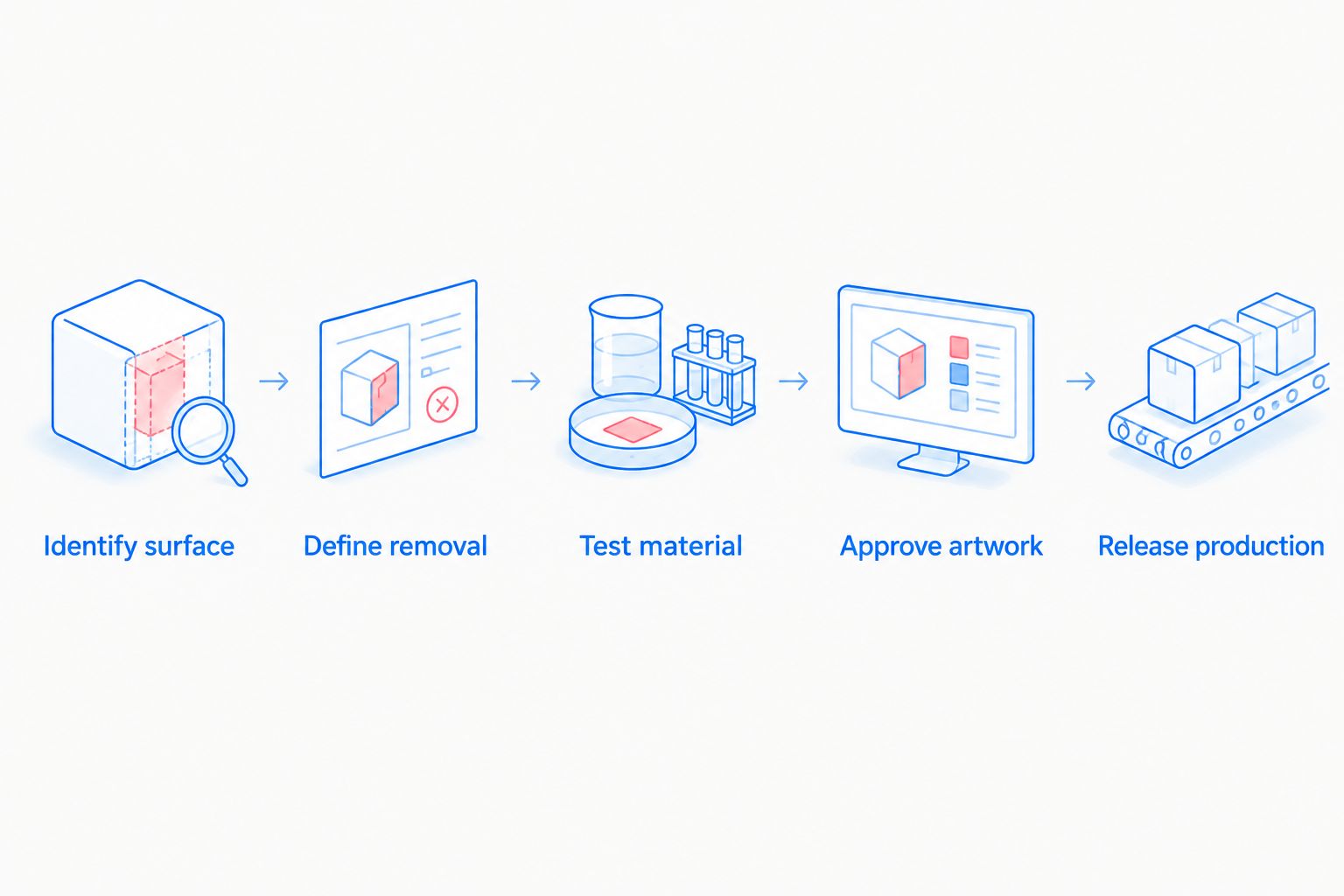
Use this sequence to keep the material decision separate from artwork approval:
Identify surface: Record whether the graphic goes on paint, a fixture, or glass.
Define removal: State whether the installation is removable or intended to remain attached.
Test material: Evaluate the selected film on the actual installation surface.
Approve artwork: Confirm dimensions, content, panel divisions, and finish.
Release production: Order only after the surface and artwork decisions agree.
Approve the surface and adhesive before releasing the mural artwork.
A useful test includes application and removal, not just an immediate adhesion check. Follow the material and paint manufacturers' instructions rather than assigning a universal waiting period to every wall coating.
Prepare mural files for production, not just approval
A presentation mockup is not a production file. Before ordering, establish the finished graphic dimensions and confirm the supplier's accepted file format, resolution, bleed, panel, and overlap requirements.
For repeat orders in 2026, keep these items in the job record:
Finished dimensions: Record the installed width and height separately from any production allowance.
Panel map: Identify the panel sequence and orientation in a separate installation reference.
Critical content: Keep faces, small type, and other alignment-sensitive details away from planned joins where practical.
Artwork version: Use one approved revision across the order and installation paperwork.
Material specification: Write the full material name rather than a shorthand such as matte vinyl.
Surface approval: Retain the test decision with the job, including any restrictions.
Inspect the export for unintended backgrounds, clipped artwork, missing fonts, and visible panel labels. Keep installation annotations out of printable artwork unless they are specifically required in a trim area.
Do not import DTF gang-sheet assumptions into mural production. Gang sheets organize transfers for apparel work; wall graphics need their own dimensions, panel plan, and material approval.
Order the material that matches the approved application
Brooklyntransfers lists removable wall vinyl, permanent matte vinyl, and adhesive-free static cling as separate products. Keep those distinctions in the purchase record so a repeat order does not change adhesive type simply because the finish looks similar.
7-mil self-clinging white film requiring no adhesive, with glass among its stated applications.
$1.50
For scheduling, confirm the production timing for the vinyl order itself. A DTF dispatch cutoff does not establish the turnaround for a wall-graphics job, and dispatch never means delivery to the installation site.
How the materials rank
This 2026 ranking prioritizes application fit: surface, adhesive, finish, installation format, and removal requirements. WallFlair Removable Vinyl ranks first because its removable acrylic adhesive and stated interior use match the wall-graphics brief directly.
The remaining options occupy different jobs rather than competing as interchangeable mural films. Matte and glossy permanent vinyl belong in approved fixture applications; static cling belongs on suitable glass.
Which vinyl should you choose?
Choose WallFlair Removable Vinyl as the default for removable interior wall decals and murals, then validate it on the actual wall. Choose permanent matte or glossy material only when the substrate and removal brief support permanent adhesive.
If the campaign also includes glass, specify that component separately. One artwork package does not require one material across every surface.
FAQ
What's the best vinyl for wall decals and murals?
WallFlair Removable Vinyl is the best match in this selection for removable interior wall decals and murals. It has a matte finish and removable acrylic adhesive; approve a test on the actual wall before production.
Is removable vinyl guaranteed not to damage paint?
No, removable adhesive does not guarantee damage-free removal from every painted surface. Paint condition, coating compatibility, and removal technique still matter, so test the actual surface.
Is Matte Cal Vinyl the same as removable wall vinyl?
No, Matte Cal Vinyl uses permanent adhesive. Its matte finish describes appearance, not removability, so it is not an interchangeable substitute for WallFlair Removable Vinyl.
Should interior murals use matte or glossy vinyl?
Choose matte when controlling reflections is part of the brief, and gloss when a reflective finish is intentional. Adhesive and surface compatibility still take priority over appearance.
Can I use White Static Cling on a painted wall?
Choose White Static Cling for suitable glass applications, not as a painted-wall mural material. It is a self-clinging white film without adhesive.
Can I install wall vinyl immediately after painting?
Follow the paint and film manufacturers' instructions before installing vinyl on a newly painted wall. Do not substitute a universal waiting period for the coating's actual requirements.
What should a print shop save for repeat mural orders?
Save the exact material name, approved artwork revision, finished dimensions, panel map, and surface-test decision. Keep installation references separate from the printable artwork.
One last thing
Put the removal requirement on the order, not just in an email. A specification that says matte vinyl leaves the adhesive undecided; a specification naming the approved removable material gives the next person a clear instruction.
For your next Brooklyntransfers wall-decal order, settle the substrate and adhesive first. The file preparation then has a defined target.