Best static cling vinyl for seasonal window displays
Best overall for seasonal glass graphics: White Static Cling. Best for permanent graphics on clear film: Clear Cal Vinyl. Best for permanent matte-finish signage: Matte Cal Vinyl. This 2026 guide separates the best static cling vinyl for window displays from adhesive-backed alternatives, so you order for the right removal cycle.
TL;DR
White Static Cling is the best static cling vinyl for window displays requiring an adhesive-free white film.
Clear Cal Vinyl suits permanent clear-film graphics, not adhesive-free seasonal changeovers.
Matte Cal Vinyl suits permanent matte-finish signage; it is not static cling.
Brooklyntransfers lists White Static Cling as a 7-mil film without adhesive.
Why this matters
A seasonal window order starts with the removal plan, not the finish. If your customer changes a promotion regularly, permanent adhesive and adhesive-free cling are different production decisions—not interchangeable versions of the same material.
Brooklyntransfers White Static Cling is best for print shops ordering adhesive-free seasonal graphics for glass. Its listed construction is a white, self-clinging film without adhesive. Clear Cal Vinyl and Matte Cal Vinyl use permanent adhesive, so this guide ranks them as alternatives for different jobs, not competing static-cling products.
For your 2026 display calendar, separate temporary promotional graphics from signage intended to stay installed. That distinction belongs on the purchase order before artwork moves into production.
What makes the best static cling vinyl for window displays?
Use these criteria before choosing a material:
Attachment method: Specify adhesive-free cling, removable adhesive or permanent adhesive. Do not let the word vinyl stand in for this decision.
Removal cycle: Identify whether the graphic comes down after a promotion or remains as standing signage.
Film appearance: A white film and a clear film create different layouts. Match the material to your intended background.
Viewing direction: State whether customers read the graphic from inside or outside, and which side of the glass receives it.
Surface condition: Confirm the actual substrate and any coatings. A glass application does not establish suitability for every window treatment.
Production handoff: Supply finished dimensions, approved artwork and an installation brief. Material selection cannot fix an ambiguous file.
Thickness helps identify the construction, but it does not establish a service-life ranking. White Static Cling is listed at 7 mil, Clear Cal Vinyl at 3 mil and Matte Cal Vinyl at 4 mil; those figures do not prove which material lasts longer in your installation.
Window-display materials at a glance
Only the first option below is static cling. The other options answer different signage requirements and should not replace cling without the customer's approval.
Rank and material
Best for
Standout feature
Key limitation
1. White Static Cling
Adhesive-free seasonal glass graphics
White, 7-mil self-clinging film without adhesive
White film is not a clear-background option
2. Clear Cal Vinyl
Permanent graphics requiring clear film
Clear, 3 mil calendered vinyl with permanent adhesive
Matte, 4 mil calendered vinyl with permanent adhesive
Neither static cling nor a removable-adhesive product
Do not choose a permanent material merely because its finish matches the artwork. Attachment method is the first filter; appearance comes after it.
1. White Static Cling: best for seasonal glass graphics
White Static Cling is a 7-mil calendered white film that clings without adhesive. The product description identifies glass as an application surface, making it the direct match here for seasonal window-display work.
Choose it when your brief calls for an adhesive-free promotional graphic on glass. The white film is part of the design decision: treat it as a white background, not as a transparent carrier that disappears around the print.
White Static Cling pros:
Adhesive-free construction matches a brief that excludes adhesive-backed graphics.
White film provides a defined background for the printed design.
The listed glass application matches the surface used in storefront windows.
White Static Cling cons:
White film does not meet a clear-background brief.
Adhesive-free construction does not establish compatibility with coated or textured glass.
Repeated reuse requires confirmation rather than an assumption based on the word cling.
Best for: Print shops and apparel brands preparing temporary promotional graphics for glass where a white background is acceptable.
For a 2026 seasonal order, record the installation side and reading direction alongside the finished size. A graphic installed inside a window but read from outside needs a production brief that explicitly describes that arrangement; do not assume the print setup from the material name.
Verdict: Buy White Static Cling for adhesive-free seasonal glass graphics; skip it when the design requires clear film.
2. Clear Cal Vinyl: best for permanent clear-film graphics
Clear Cal Vinyl is a 3 mil pressure-sensitive calendered vinyl with permanent adhesive. Its product description also identifies it as water-resistant, but that does not establish an outdoor service life or suitability for every exposure.
This is the alternative for a job that explicitly requires clear film and permanent attachment. It is not a clear version of static cling, and it should not enter a seasonal order through an unapproved material substitution.
Clear Cal Vinyl pros:
Clear film matches a brief that does not call for a white material background.
Permanent adhesive matches signage intended to remain installed.
Its listed water resistance is a documented material characteristic.
Clear Cal Vinyl cons:
Permanent adhesive does not meet an adhesive-free specification.
Clear film alone does not establish how white artwork or backing will print.
Water resistance does not establish a removal method or weathering guarantee.
Best for: Permanent graphics where the customer specifically wants clear film and approves adhesive-backed installation.
Before ordering, confirm the print construction as well as the substrate. Transparent film, white ink and viewing direction are separate decisions; selecting a clear material does not settle the entire production brief.
Verdict: Buy Clear Cal Vinyl for approved permanent clear-film work; skip it for an adhesive-free seasonal changeover.
3. Matte Cal Vinyl: best for permanent matte-finish signage
Matte Cal Vinyl is a 4 mil pressure-sensitive calendered vinyl with a matte finish and permanent adhesive. Choose it for its specified finish and attachment method, not because a matte appearance sounds appropriate for a temporary campaign.
This material belongs on the permanent-signage side of the decision tree. A retail campaign can contain both temporary window graphics and standing signage, but those components need separate material specifications.
Matte Cal Vinyl pros:
Matte finish meets a brief that expressly calls for that surface appearance.
Permanent adhesive matches signage intended to stay installed.
The listed 4 mil construction gives your production record a specific material identifier.
Matte Cal Vinyl cons:
Permanent adhesive is not static cling.
Matte finish does not establish easy removal.
Film thickness does not prove scratch resistance or service life.
Best for: Permanent matte-finish signage with an approved substrate and an installation plan that allows adhesive-backed material.
For repeat orders, retain the exact material name rather than a shorthand instruction such as matte window vinyl. That shorthand leaves attachment method unresolved and invites an incorrect reorder.
Verdict: Buy Matte Cal Vinyl for approved permanent matte signage; skip it when seasonal removal is the main requirement.
Choose the material before uploading artwork
Brooklyntransfers offers these materials as distinct products. Use the cards below after deciding whether the job needs adhesive-free white film, clear permanent vinyl or matte permanent vinyl—not as interchangeable choices for the same specification.
4 mil calendered vinyl with a matte finish and permanent adhesive.
$1.50
Prepare a repeatable seasonal-window order
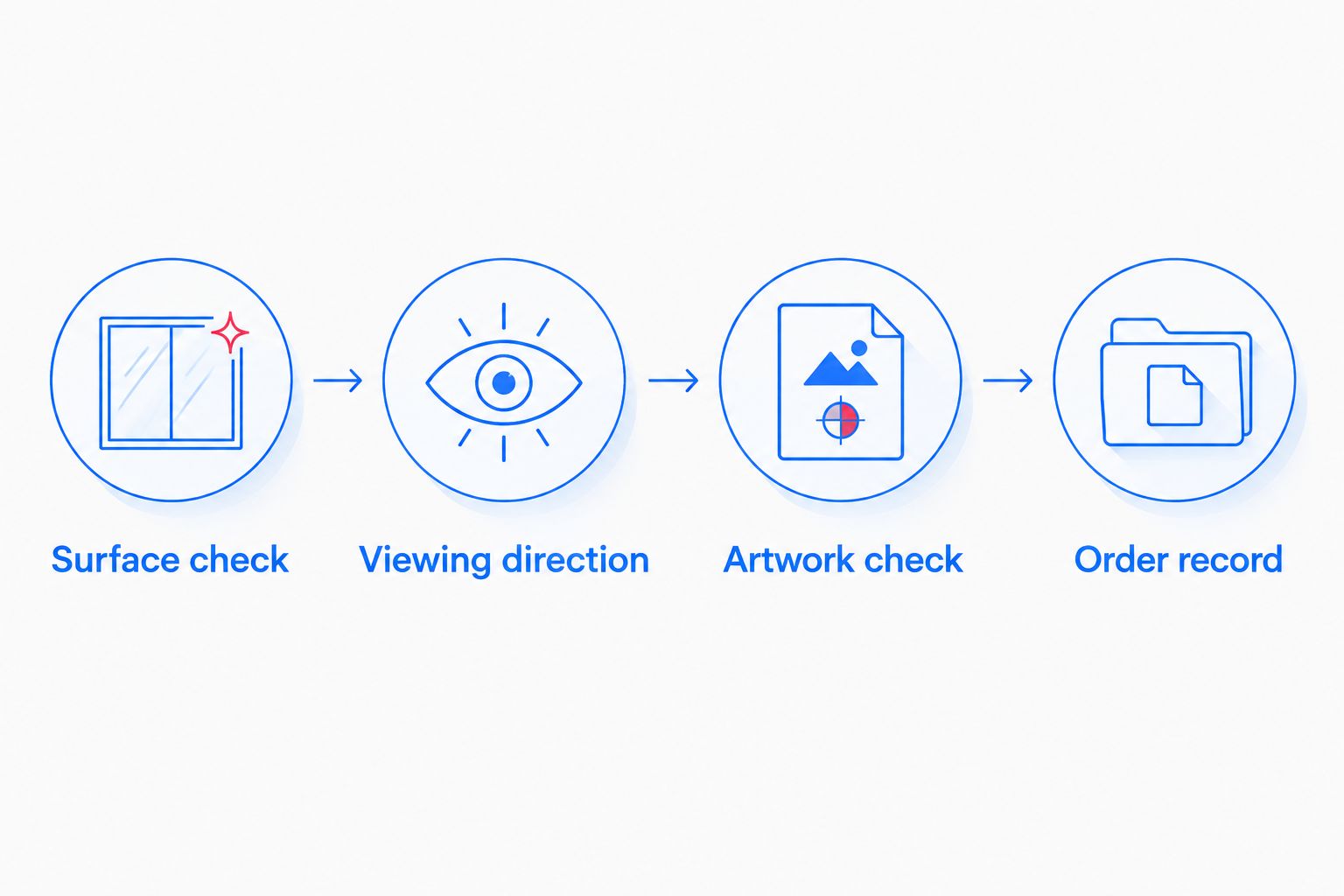
Use this sequence for your 2026 campaign files. It keeps material selection, artwork approval and installation instructions in the same handoff.
Surface check
Identify the window surface and flag coatings, texture or treatments before ordering. Provide the installer with the actual substrate information rather than a general instruction to apply it to glass.
Check the intended display area as well. Frames, handles and existing graphics affect the usable placement area, even when the artwork fits the overall pane dimensions.
Viewing direction
Write down where the graphic sits and where the viewer stands. Inside-mounted graphics read from the street are a different brief from graphics viewed on the installation side.
Do not mirror a file without confirming the required production setup. Record the approved orientation with the artwork so the next operator does not have to infer it.
Artwork check
Set the artwork to its intended finished dimensions and inspect it at output size. Review small type, fine lines and image edges before approving the file.
For White Static Cling, design around the white film. For clear vinyl, confirm how areas intended to appear white will be produced; the clear substrate is not itself a white backing.
Order record
Save the approved file with its material, finished size, quantity, installation side and campaign identifier. Keep the final production version separate from editable drafts.
Record application instructions with the job, too. Do not copy DTF heat-press settings into a window-graphic workflow: apparel transfers and window films are different product categories.
Resolve the surface and viewing direction before approving the production file.
Keep the material specification attached to every reorder. Reusing artwork does not automatically mean reusing the same film: a temporary promotion and a permanent opening-hours graphic can share a design style while requiring different attachment methods.
How the materials rank
The ranking prioritizes attachment method, removal intent, film appearance, surface fit and production clarity. White Static Cling ranks first because it is the only listed option here with adhesive-free construction and an explicit glass application.
Clear Cal Vinyl and Matte Cal Vinyl occupy separate permanent-signage use cases. This is a specification-based buying guide, not a durability test, and no ranking here claims a measured lifespan, reuse count or comparative print performance.
Which window-display material should you choose?
Choose White Static Cling as the default for adhesive-free seasonal window graphics on a white film. Choose Clear Cal Vinyl only when clear film and permanent adhesive are explicit requirements; choose Matte Cal Vinyl when permanent attachment and a matte finish define the job.
For Brooklyntransfers window-display orders in 2026, put that decision in writing before submitting the artwork. Do not substitute a permanent adhesive product merely to match a finish preference.
FAQ
What's the best static cling vinyl for window displays?
White Static Cling is the best fit among these materials for adhesive-free seasonal graphics on glass. It is a 7-mil white self-clinging film without adhesive; choose a different construction if the brief requires transparency.
Is static cling the same as removable adhesive vinyl?
No. Static cling attaches without adhesive, while removable adhesive vinyl uses an adhesive layer. Specify the attachment method on the order rather than treating temporary vinyl as a complete material description.
Can I use White Static Cling for graphics read from outside a window?
Confirm the installation side and print construction before ordering outside-readable graphics. A white film selection alone does not establish how an inside-mounted graphic will be printed for street-side viewing.
Is Clear Cal Vinyl better than static cling for seasonal displays?
Clear Cal Vinyl is not the better choice when adhesive-free seasonal removal is the requirement. It has permanent adhesive and suits a different brief: permanent graphics requiring clear film.
Does matte vinyl mean the graphic is removable?
No. Matte describes a finish, not an attachment method. Matte Cal Vinyl is listed with permanent adhesive, so its finish does not make it a substitute for static cling.
Can I reuse static cling for the next seasonal campaign?
Confirm reuse guidance for the specific material before planning another installation. Adhesive-free construction alone does not establish a reuse count, storage procedure or performance guarantee.
What should I send with a seasonal window-graphic file?
Send finished dimensions, quantity, material, installation side and viewing direction with the approved artwork. Also identify the actual window surface and flag any coatings or treatments before production.
One last thing
Put the removal instruction on the purchase order, not just the installation instruction. A seasonal display has two operational events: it goes up, and it comes down. Specifying adhesive-free construction at the start keeps that second event part of the buying decision.